Celebrating Carnaval in Nice
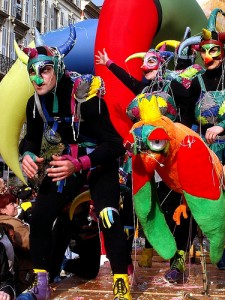 When you hear the word Carnaval, most people immediately think of boisterous celebrations in Rio or drunken, bead-filled Mardi Gras parades in New Orleans. What may not immediately come to mind, however, is the Carnaval celebration in Nice, along the French Mediterranean coast. But the Nice Carnaval is actually the original Carnaval celebration, and is certainly the biggest winter festival along the French Rivera.
For the two weeks leading up to Mardi Gras, Nice comes alive with activity and colorful celebrations including Carnaval processions, elegant flower parades, swanky soirées, rock concerts and techno shows, entertainment and fireworks that attract approximately 1.2 million people each year to the seaside city.
>>Did you know you can fly direct from New York’s JFK to Nice?
Origin of Nice Carnaval
The word “Carnaval” comes from “carne levare” (“away with meat”).The earliest mention goes back to 1294, when the Count of Provence Charles d’Anjou spent the “the joyous days of Carnaval” in Nice. The festival started before the Middle Ages when the people of Nice, in anticipation of the 40 days of the Catholic Lenten season, enjoyed their fair share of rich, abundant foods.
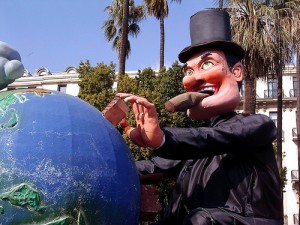 During these few weeks, it was pretty much anything goes in terms of the amount of excess. Carnaval also became a time for mocking everything and everybody, at everyone’s expense, which is where the origin of the masks comes in – they wanted to be protected from getting called out for their mocking.
Until the 18th century, masked balls punctuated Carnaval in what is now Old Nice. But the “Abbés des Fous” (Fools’ Abbots) soon stepped in – clergy assigned with the thankless task of keeping excesses in check. And Carnaval festivities have been suspended throughout its history, mainly during the French Revolution and the First Napoleonic Empire.
History of “Modern” Carnaval
On the first day of Carnaval (February 17 in 2012), the King of Carnaval arrives at Nice’s Place Masséna and the party begins. The joy is downright contagious.
On the first Sunday afternoon of festivities, the Carnaval procession is made up of dozens of floats and as many as 500 “big heads” (papier-mâché caricatures) in a colorful parade, along with traditional street theatre and music groups from all over the world.
On the final day of Carnaval, Mardi Gras (“Fat Tuesday”), there is a parade that lets you know you’re going out with a bang.

Carnaval 2012
In 2012, Carnaval is happening February 17 – March 4.
Every year, there is a theme decided for the costumes and floats for the parade. The theme for 2012 is “King of Sport,” and Great Britain, the host of this year’s Olympics, is a guest of honor. With more than a million people expected to take part in festivities, Carnaval in Nice in 2012 is sure not to disappoint.
>>Check out the official Nice Carnaval web site for more information