Corbières: Wine, Cheese and Medieval Fortresses
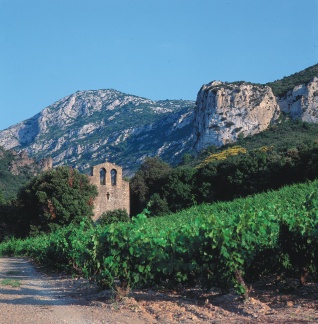 Nestled near the Spanish border between the Pyrénées and the Mediterranean coast is the Corbières, a region distinguished by its tangle of rocky slopes, deep ravines, scattered shrubs, fields of grape vines and rosemary and an azure blue sky that matches the nearby sea.
Wine, Food and Scenery
This mountainous region in the foothills of the Pyrénées high altitude and mild, dry climate has made it known for its superb wine grapes since Roman times. In fact, Corbières wines are the largest AOC certified group (not sure what that means? Read my post on Understanding French Wine Classifications), and are known for their rich and full-bodied flavor. The mostly red wines that come from this region are distinguished by both their spicy, fruity and bold flavors as well as their aging process in oak barrels.
The food from this region tends to be rich and paired well with the wines, meaning you’ll see a lot of red meat, duck, and foie gras, and Tomette des Corbières (unpasteurized sheep’s milk cheese) on the menu. If you are a wine lover, a food lover or both and have a desire to get away from the crowds and experience a slower, simpler lifestyle, this is the place for you.
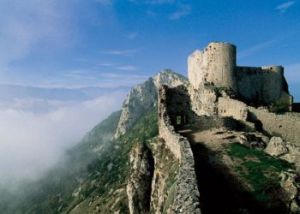 Citadelles du Vertige (aka The Citadelles of Vertigo)
This spectacular region has a rich and unique history. In the 12th century, the Cathars built the Citadelles du Vertige high in the surrounding hills while hiding from the Catholic Church, which pursued the group of “heretics” into the foothills of the Pyrénées. Nestled among these incredible remains of medieval strongholds remains churches and abbeys hidden in hollows. Although not as well preserved (or touristy) as nearby Carcassonne, this old fortress city is beautiful and well worth a special visit.
Where to Stay
The major towns/cities in Corbières are Largrasses, a picturesque medieval village known for its abbey founded by Charlemagne and Peyrepertuse nicknamed “Little Carcassonne” and is constructed on rocky cliffs above the valley.
While the most accommodation options will probably be found in or around these two areas, you may be better off finding a rural chambre d’hote to stay in. If you are unfamiliar with chambers d’hotes and/or gites, they are the French version of a bed and breakfast. They are usually rooms attached to or in someone’s home. This is perfect in not only providing comfortable, homey and affordable digs to stay in for the night, but also is a great alternative to hotels, while still being much nicer than a hostel. Plus, at certain chamber d’hotes and gites, you will be served not only breakfast, but can elect to have dinner with the family and/or the other guests as well.