French Pastries
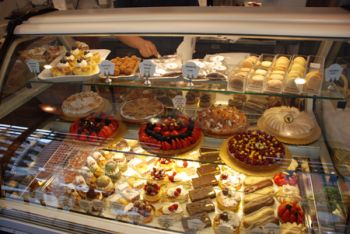 With patisserie cases overflowing with the most delicious looking sweet treats around every corner, it is just too hard to resist not getting your daily fix of a flaky, melt-in-your-mouth pastry. You can pick out a new treat every day and take it to a neighboring cafe to eat while you sip a cappuccino.
While each patisserie will have their own variations and unique creations, there is definitely a standard array of flaky, buttery treats you are sure to find at most pastry shops around France. For those not familiar with the many varieties of pastries, here is a comprehensive list of pastries found in France. I would also highly recommend asking the patissier which pastry he or she thinks is best that day; sometimes different specialties are made on different days of the week.
French Pastry All-Stars
Here is a list of some of my favorite pastries and those most commonly found at patisseries across France. The list is comprehensive, but not exhaustive, as the French have about as many types of pastries as the Eskimos have for the word snow.
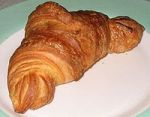 Croissant: The old standard. You can never go wrong with this crescent shaped, buttery and flaky pastry. The perfect balance of sweetness and puffiness, crispiness and softness, a well made croissant will melt in your mouth and have you craving another as soon as you finish the first. The story is that the croissant first appeared in French cuisine after the Muslim defeat by the French at the Battle of Tours in 732. The pastry was given its shape to represent the Islamic crescent. For the croissant of your dreams, make sure to get the croissant au beurre.
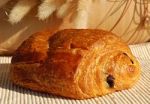 Pain au Chocolat: Cousin to the croissant and almost everyone’s favorite French pastry, a pain au chocolat is basically a croissant-type puff pastry containing a thick stripe of chocolate (usually dark chocolate). Literally translated as “chocolate bread,” pains aux chocolates are best when served hot with the chocolate melting into the pastry in the middle. Just imagining the chocolate oozy from the butter, flaky pastry makes me swoon. Yum.
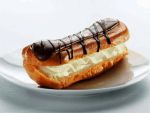 Éclair: Different than the donut-type dough used in the American version of this French favorite, éclairs are made from choux pastry (which literally translates as “cabbage” pastry because of its appearance when made) and is filled with cream and topped with icing (usually chocolate). In France, éclairs are made by baking the oblong choux until crisp and hollow and then filling it with coffee or chocolate flavored pastry cream. Other favorite fillings are custard or freshly whipped cream, rum-flavored custard, almond or chestnut purée or fruit fillings. Éclairs will vary from patisserie to patisserie, but are always delicious.
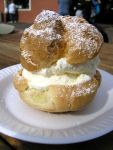 Profiterole (aka Cream Puff): This is kind of like a short, squat éclair. Choux pastry is baked into small round puffs, which when cooled become hollow in the middle, and are served with whipped cream or custard in the center. You will commonly see this garnished with a hardened caramel sauce or chocolate sauce. Stacked profiteroles called croquenbouche are often served at weddings in France.
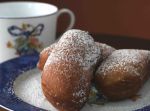 Beignet: The French version of a doughnut, beignets are a deep-fried pastry often served garnished with powdered sugar. In France, beignet is an umbrella term for a variety of different pastries that can be either sweet or savory. In fact, you will sometimes find beignets filled with potatoes, mushroom or meat. Unlike American doughnuts, however, beignets tend to be very light and airy and are often hollow in the center. They are of course best when served hot. Strangely, they’re also sold by vendors on the beach.
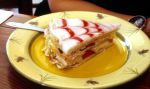 Mille-feuille: This pastry’s name literally means “thousand sheets,” and is a pastry made from many layers of puff pastry alternating with a sweet filling (usually pastry cream, whipped cream or custard). Every patisserie in France will have its own version of this pastry, including differently flavored creams and topped with different icings. These are best when freshly made, as even day-old mille-feuille can get gummy.
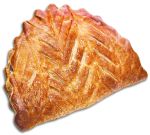 Chausson aux Pommes: This is another classic and is found at almost any patisserie in France. It is made with a puff pastry crust much like a croissant and filled with chunky apple filling that’s a cross between apple sauce and apple pie filling. They are best when served warm and there is just something so delicious about the flaky pastry against the soft, gooey apple filling that makes these an all-time favorite treat.
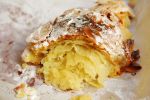 Croissant Amande: Almond croissants are not simply croissants topped with almonds and powdered sugar. This delightful treat is filled with almond paste (which is made from sugar, almond milk and butter and/or cooking oil). The result is a crispy, nutty, yet soft in the middle treat that will make you slip into a dream-like state. If you love nutty treats, put this one on your list.
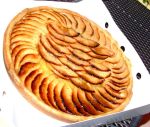 Tarte: The French answer to American pie. They are usually made with a thin, flat layer of puff pastry and then are topped with fruit. You will sometimes see a layer of custard in between the pastry and the fruit, but French tartes are always open-faced. You will find tartes of all sizes and fillings and you can almost never go wrong with a well made tarte. Choose one that uses in-season fruit, and it’s divine.
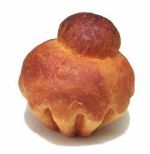 Brioche: Although more of a bread than a pastry, because of its sometimes sweet flavor, I’ll put brioche on this list. Brioche is a bread made with lots of butter and egg, which gives it a sweet, rich flavor and tender consistency. It is often topped with an egg wash before baking, giving it a flaky, deep golden crust. A brioche à tête, which translates as “brioche with head” (as pictured), adds a small roll of the dough on top and are baked in muffin-like tins to achieve their small, rounded shape.
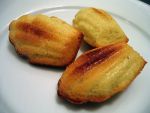 Madeleines: These little cakes have a distinctive shell-like shape and have the consistency of a light pound cake. They have a pronounced butter and lemon taste and are often made with almonds as well. You will find these little cake-like cookies across France, and they are a favorite treat among children.
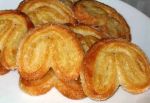 Palmiers: Palmiers are crispy and delicate leaf-shaped cookies made from puff pastry. They are made by rolling out pastry dough, sprinkling it with sugar and then folding it several times. The two sides of the pastry are then rolled inwards to meet at the center and the cookie is baked until crispy and caramelized. These are the perfect balance of crispy and flaky and always see to be just sweet enough. They’re perfect for dunking.
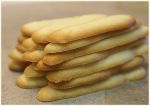 Langues de Chat: This simple cookie translates literally as “cat’s tongues.” They are made from butter, sugar, flour and eggs and have a light yet crispy texture. They get their name for their long, tongue-like shape and are another treat popular among children. Here is a recipe for these delightful little cookies – they’re great for coffee time at bridal showers or book clubs.
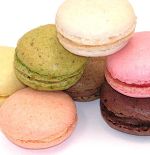 Macarons: Hold onto your hats, because I’ve saved the best for last. Macarons are sandwich-like pastries made with two cookies and a thin layer of flavored icing in the center, making a hamburger shaped result. They are delicately crunchy on the outside and moist, chewy and flavorful on the inside. They also come in every flavor under the sun. If you find yourself in Paris, you should not resist the temptation to get a bag of macarons where they were first invented at the Ladurée pastry shop on the Champs Elysées, where 15,000 of these delightful little cookies are sold each day.
>>Want to know more about French pastries and sweet treats? David Lebovitz is an American pastry chef and blogger living in Paris. Check out his blog, “Living the Sweet Life in Paris”